Context
Remote workers don’t need a desk so much as a good hour: fast wifi, quiet, a plug and a price that makes sense.
Outoo is an early-stage marketplace where people book a desk in a café or coworking space by the hour or the day. It launched on web, iOS and Android, with a founder, a very small team and about five months to get a first version in front of hosts and guests.
The problem
Existing options were built for companies renting offices by the month. Freelancers and remote workers wanted the opposite: walk into a place for two or three hours and know in advance that it works.
The brief was a marketplace. I framed the design problem this way:
My role
I was the only designer and worked directly with the founder, Fernanda Mourão, and the engineers. I shaped the product as much as the screens.
What I owned
- Product design across web, iOS and Android, from search to checkout
- Research with guests and hosts, and the decisions that came out of it
- The design system the three platforms shared
- Prototypes with real places, prices and photos
- Review of each build with engineering
What the team owned
- The founder owned the business model, hosts and partnerships
- Engineers owned the booking engine, payments and maps
- The founder and I prioritised scope together, week by week
Process and insights
I interviewed freelancers and remote workers, spent time in cafés and coworking spaces, and talked to the people who run them.
- People pick a place by wifi and noise before price. A bad connection costs more than a few dollars.
- Uncertainty is the real cost. People wanted proof that a seat would be there when they arrived.
- Short sessions are common. Many only needed two or three hours, so a daily price alone felt wrong.
- Hosts don’t want a dashboard. A café owner will fill in a short form, not manage inventory software.
Key decisions
Four decisions shaped the product.
1. Show the map and the list together, with filters that matter for work
Search shows results and a map side by side. The filters are the ones remote workers actually use: wifi quality, noise, plugs and place type, plus an hourly-only switch. Every result states its wifi, plugs and noise in words and colour, so a person can compare places without opening any of them.
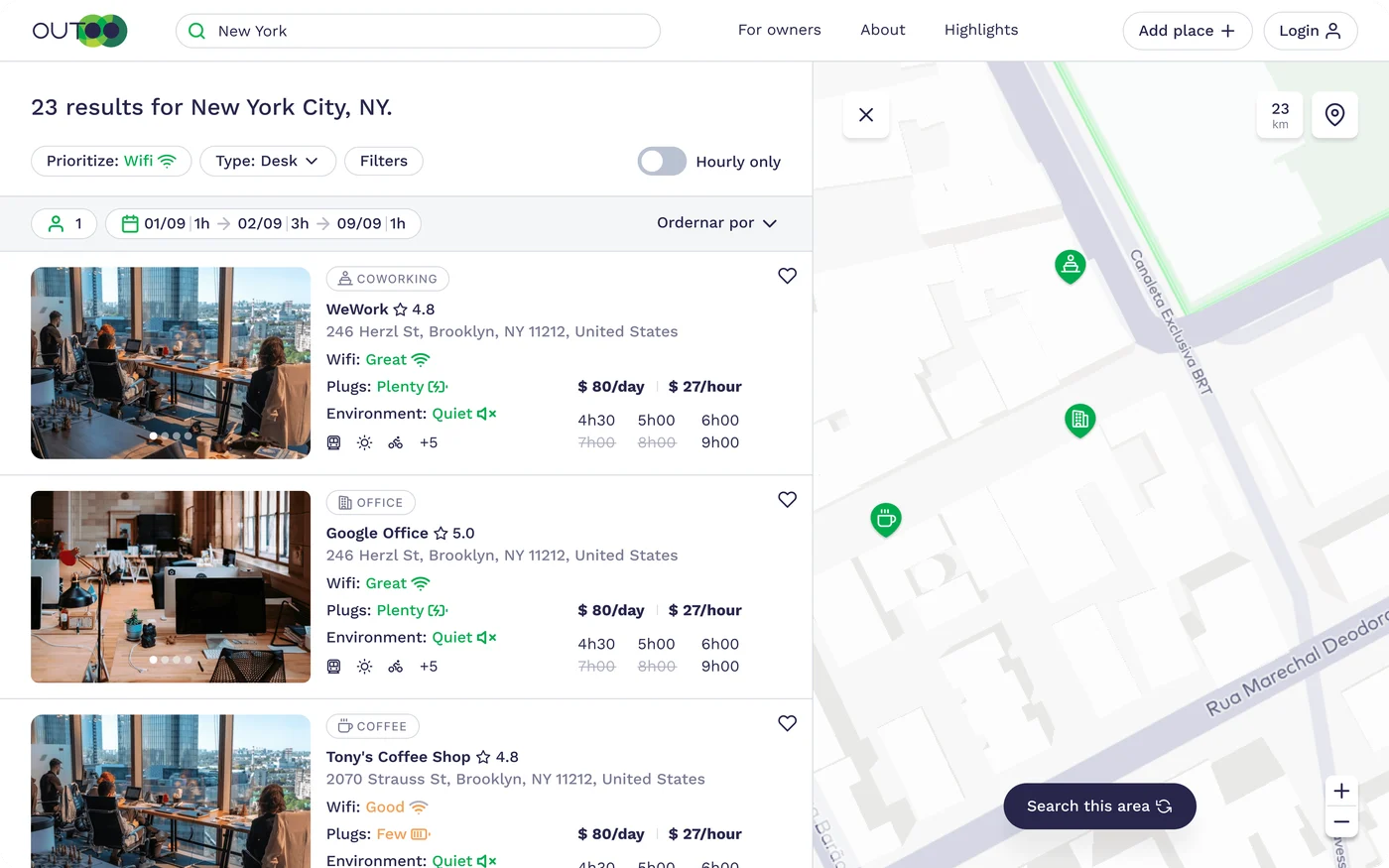
Chose
Wifi, plugs and noise as first-class facts, shown on every result.Turned down
A photo-first grid like a travel marketplace. It hides what workers need to know.2. Price by the hour and by the day, side by side, then reserve on the same screen
The place page switches between daily and hourly pricing and shows the discount against the original price. Dates, number of people and desk type sit under the price, and Make a reservation is the only primary action. From the place page to a confirmed booking takes two taps.
Chose
One screen from price to reservation, with the discount shown against the original price.Turned down
A multi-step checkout. Every extra step lost people in testing.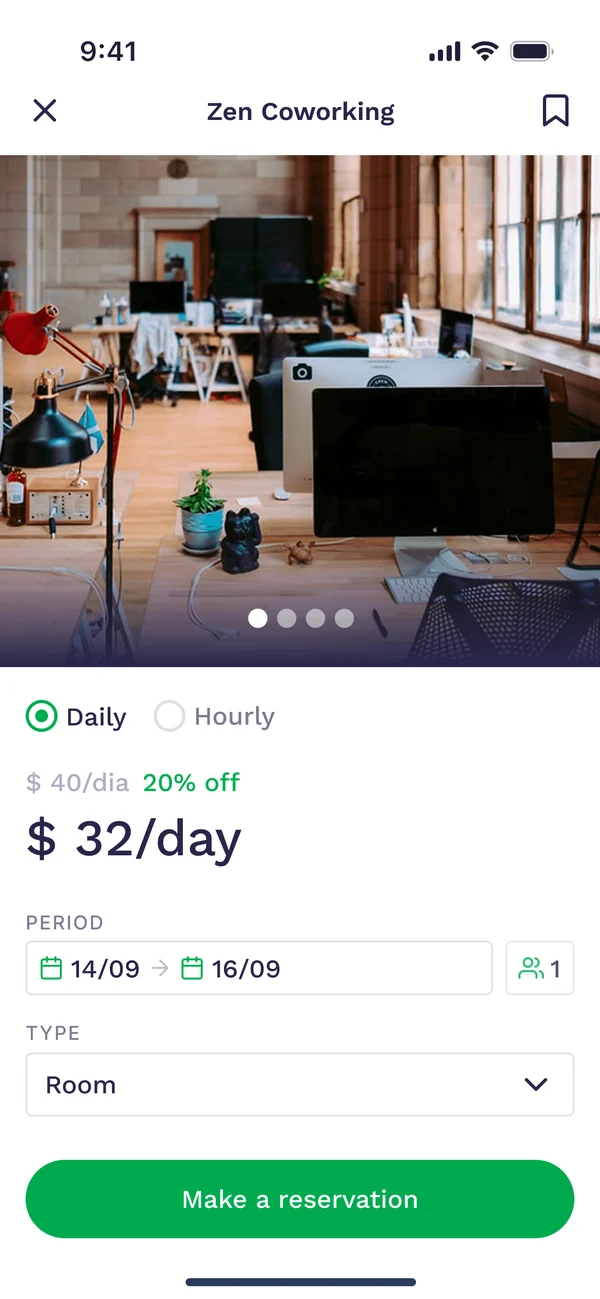
3. Let the reservation live on your lock screen
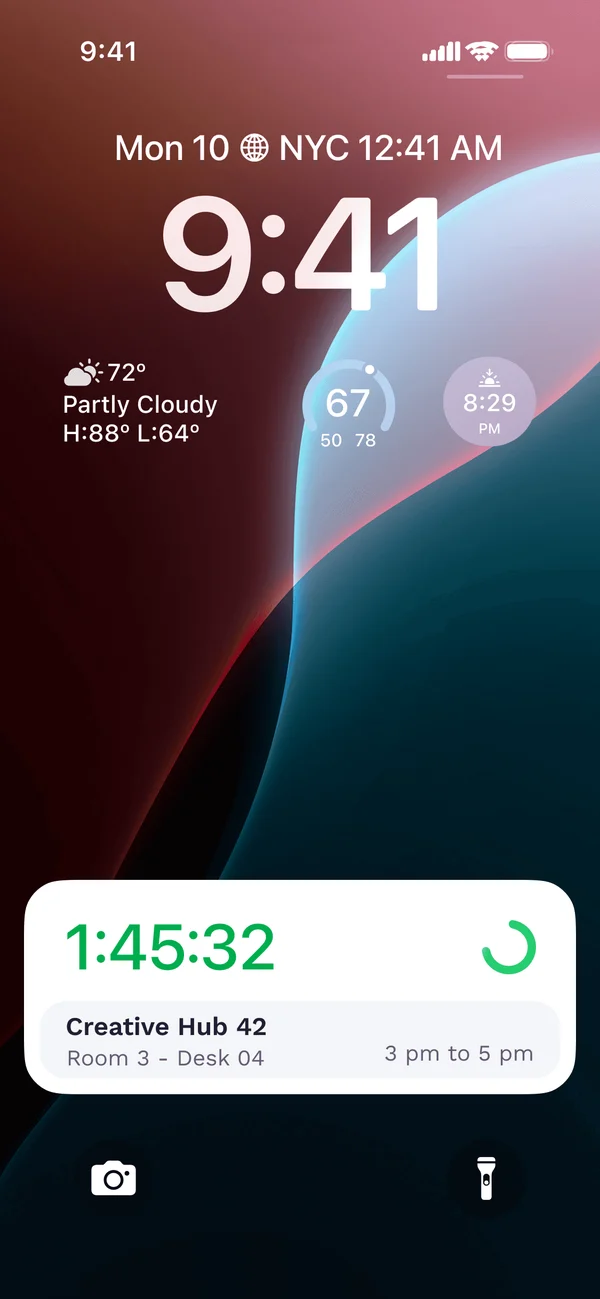
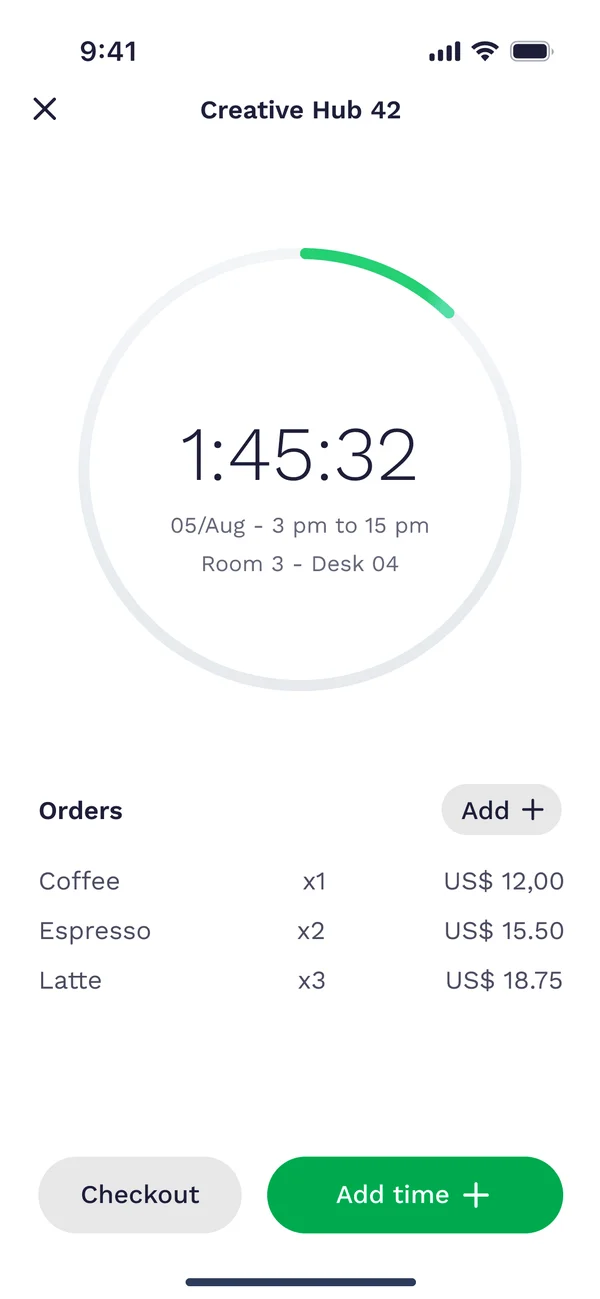
Once booked, the reservation becomes a countdown: the time left, the room and desk, and the orders you’ve added. Add time and Checkout stay one tap away, and the same countdown appears on the lock screen so people can see it without opening the app.
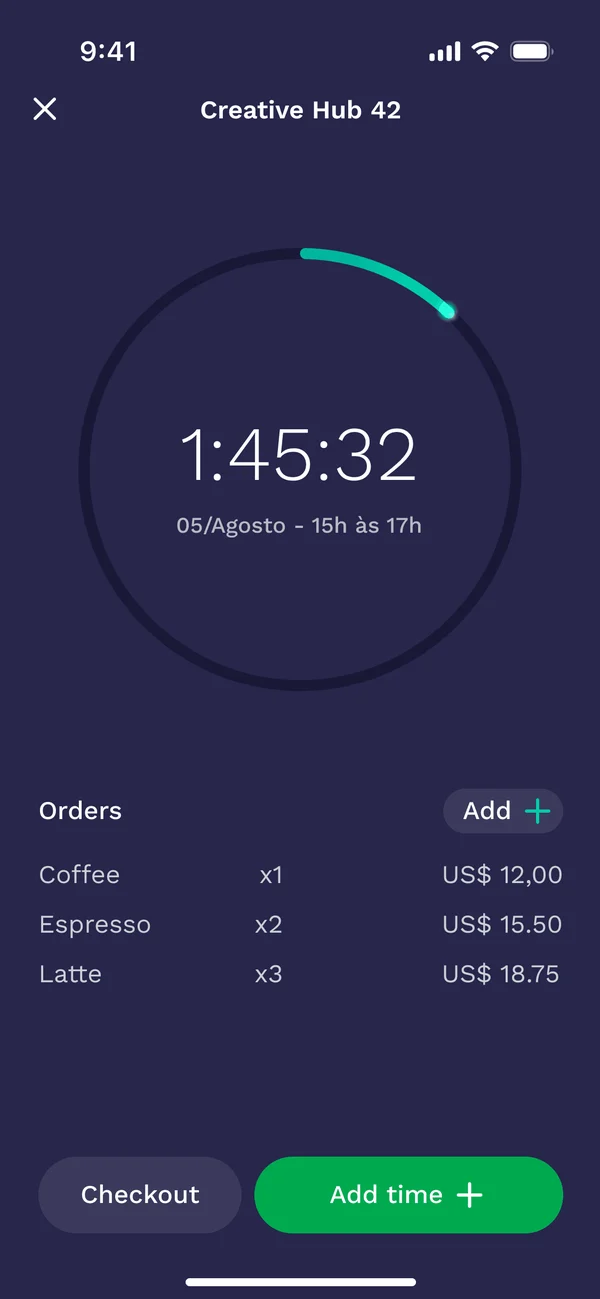
Chose
A countdown with Add time and Checkout one tap away.Turned down
A static confirmation email. People forget when their time ends.4. Keep the host side short
Hosts add a place with a short form: name, photos, number of desks, opening hours and a daily and hourly price. Wifi, plugs and noise are one-tap choices, and everything else is optional. A host can list a place in one sitting.
Chose
A short form, one-tap facts and optional details.Turned down
A full inventory dashboard. It is the reason small hosts abandon listing tools.Outcome
In the first three months, 38% of new users booked a desk in their first session, and more than 120 places listed. About half of bookings were made by the hour, which confirmed the pricing bet.
Working with Victor was great because of his holistic vision and willingness to understand the context, propose ideas, and always be available to discuss needs that might not even be in the scope. It made all the difference for our product’s success.
 Fernanda MourãoFounder of Outoo
What I’d do next
- Show live availability, so people can see which desks are free before they choose a time.
- Add a “work-ready” rating built from guests’ own reports on wifi and noise.
- Offer repeat bookings for people who work from the same place every week.
Reflection
- Facts beat photos on a work marketplace. Putting wifi and noise on the card did more than better imagery.
- Design the whole session, not only the booking. The countdown made the product feel alive after the tap.
- Small teams need fewer screens. Cutting the host dashboard let us ship in five months.